Letter
The 43-Year Wait
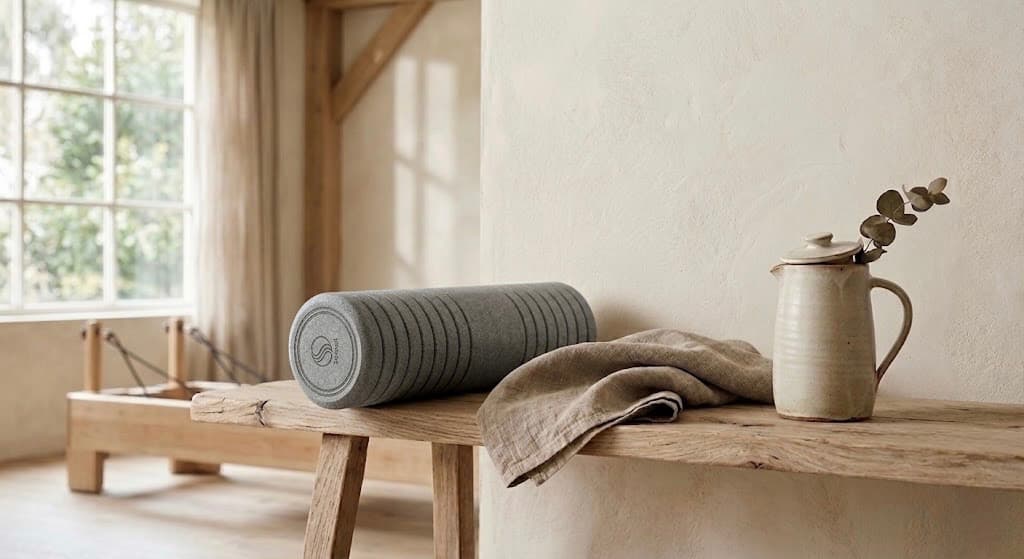
The cork in your hands took 43 years to become what it is — plus the calf release technique your lower body has been waiting for.
Sōmavel4 min read
A curated briefing at the intersection of recovery science, material intelligence, and the quiet systems that govern how your body actually works.
The 43-Year Wait
The cork in your hands took 43 years to become what it is.
A cork oak’s first bark stripping happens around age 25, yielding rough, unusable “virgin” cork. Only at the third harvest, roughly 43 years after planting, does the bark reach the density and cellular uniformity that makes it extraordinary.
Every cubic centimeter contains 40 million cells — each a pentagonal or hexagonal prism filled with trapped gas, arranged in honeycomb geometry. The tree is never felled. The same oak gives its bark this way for roughly 200 years.
A harvested cork oak absorbs 3–5× more CO₂ during bark regeneration than an unharvested tree.
The synthetic foam roller? It off-gases benzene, toluene, and formaldehyde. That “new roller smell” is literally escaping toxic gas.
The Two-Step Release: Calves
Trigger points in the gastrocnemius and soleus can masquerade as sciatica, Achilles tendinitis, plantar fasciitis, and even headaches.
Step 1 — Find & Hold: Move at 1 inch/sec. Find a tender spot. Hold 30–60 seconds until pain fades ~50%.
Step 2 — Active Release: 4–6 slow ankle point-and-flex. The brain chooses release.
Your roller isn’t a muscle tenderizer — it’s a nervous system mediator.
The Power Paradox
12 minutes of foam rolling before activity caused a significant decrease in vertical jump height and slowed sprint times. Your nervous system shifts into recovery mode when it should be priming for output.
Post-workout rolling results (Wiewelhove et al., 2019): sprint time +3.1%, flexibility +4.0%, pain felt −6%.
Takeaway: Use tools to restore, not to prime. Save the roller for after.
The 5-Second Reset
Watch a cat wake up. Before it moves — a full-body contraction, then slow release. That’s pandiculation, your built-in neuromuscular reset.
Try this now: Shrug your shoulders to your ears. Hold 5 seconds, maximum contraction. Release over 8–10 seconds. Notice left vs. right. That’s recalibration in real time.
Why Density Matters
Your fascia’s deep mechanoreceptors — Ruffini and Golgi — only fire under sustained, firm pressure. Soft foam compresses before reaching them. Cork’s density (200–300 kg/m³ vs foam’s 30–100) engages the receptors that regulate muscle tone and vagal response.
Cork maintains integrity for 10+ years. Suberin makes it hydrophobic and antimicrobial — no disinfectants needed. A budget EVA roller fails within 12 months.
Written by

Sōmavel
Practitioners, movement specialists, and material researchers writing on the practice of recovery, and the materials and rituals that make it last.