Materials
Cork: Nature's Perfect Recovery Material
Why cork outperforms foam, rubber, and plastic for recovery, backed by material science.
Sōmavel Editorial7 min read

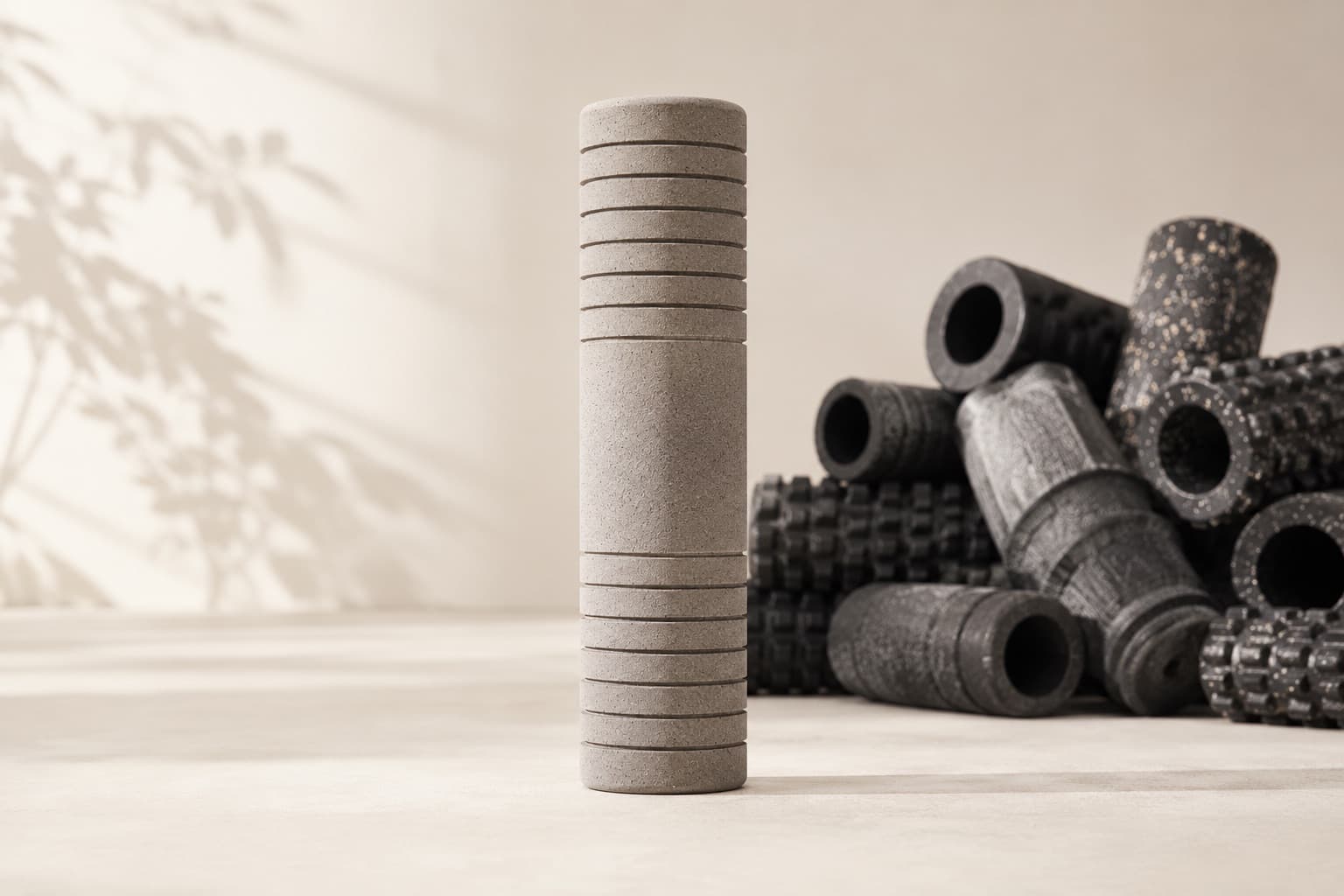
The recovery tool market is dominated by petroleum-derived materials: polyethylene foam, EVA, PVC, dense rubber. Most products in the category are made from the same feedstocks as packaging material. Cork is categorically different, and the difference isn't marketing. It comes down to what the material actually is and how it behaves under load.
What Cork Actually Is
Cork is the bark of the Quercus suber, the cork oak, a tree native to the western Mediterranean, with Portugal home to roughly a third of the world's total forest. The harvest is a stripping of the outer bark, done by hand every nine years. The tree is not cut down. It regenerates its bark, drawing in CO₂ during the regrowth cycle. A harvested cork oak lives 200–300 years and is harvested 15–20 times in its life.
The bark itself is a cellular structure of approximately 40 million cells per cubic centimeter, each one a tiny sealed chamber filled with a gas mixture similar to air. That cellular geometry is why cork behaves the way it does.
Density: The Property That Matters Most
For a recovery roller, density determines whether the tool can actually reach the target tissue. Too soft, and the roller collapses under body weight before it generates enough pressure to affect the fascia. Too rigid, and the nervous system braces against it. The muscle contracts protectively, which is the opposite of what you want.
Natural cork lands in the functional range. Its cellular structure compresses under load but doesn't bottom out. It maintains a consistent resistance throughout the movement. Foam, by contrast, has a soft outer layer and a progressively harder interior. The pressure you feel changes as the foam compresses, making it hard to calibrate.
How Cork Compares to Other Materials
- Polyethylene foam: The category default. Cheap, consistent to manufacture, but degrades within months of regular use. The cells collapse permanently under repeated load. A foam roller bought today will be noticeably softer in six months.
- EVA and textured foam: Slightly more durable, with surface ridges marketed as mimicking a massage therapist's fingers. The texture breaks down, the base material still degrades. The ridges also create uneven pressure points, which can be uncomfortable without providing additional therapeutic benefit.
- Rubber and PVC: Durable, but too dense for most users. Force the nervous system to guard rather than release. Some athletes with high tissue density use them effectively; for the average person, they create more tension than they resolve.
- Cork: Doesn't degrade under normal use. The cellular structure is load-bearing, not decorative. It evolved to protect a tree from mechanical stress for decades. The surface has natural grip without being abrasive. It doesn't absorb sweat or bacteria the way foam does.
The Antimicrobial Factor
Cork contains suberin, a waxy biopolymer that makes the material naturally resistant to moisture and microbial growth. Foam rollers are essentially sponges. They absorb sweat and provide an ideal environment for bacteria and mold. Most people don't clean them between uses, and the porous surface makes thorough cleaning difficult.
Cork's closed-cell structure doesn't absorb liquid. Sweat beads on the surface and can be wiped off with a damp cloth. After months of use, a cork roller stays sanitary in a way that foam cannot.
Thermal Comfort
Cork is a thermal insulator. At room temperature, it feels neutral, neither cold nor warm. Hard plastic and rubber rollers feel cold when you first apply them to skin, which triggers a reflex contraction. Starting a recovery session with a tool that causes the muscle to contract immediately works against the goal.
It's a small thing, but the first five seconds of contact with a tool sets the nervous system's initial response. Neutral temperature means neutral tissue response, which is the starting point you want.
The Honest Case for the Price
A cork roller costs more than a foam roller. The material is harvested by hand, processed with significantly more care, and doesn't need to be replaced every year. Over a three-year period, a conservative estimate for how long cork maintains its properties under daily use, the cost per session is lower than foam. That's before accounting for the fact that foam's performance degrades while cork's stays consistent.
The price is also a statement about what the recovery tool market has normalized. Petroleum-derived foam has set the price expectation, but it's priced the way it is because it's made from the cheapest feedstocks available and manufactured at scale. Cork is priced the way it is because the raw material has real constraints: limited geography, a nine-year growth cycle, hand harvesting. The cost reflects what the material actually is.
References
Written by

Sōmavel Editorial
Practitioners, movement specialists, and material researchers writing on the practice of recovery, and the materials and rituals that make it last.